| |
|
|
INTRODUCTION Professor Dr. Đorđe Joanović is recognized as
the founder of oncology and experimental pathology in Serbia. He
holds the distinction of being the first Serbian oncologist. At his
time, Dr. Joanović attained the highest academic rank and position
among Serbs worldwide, with a particular focus on experimental
oncology, pathology, oncological pathology, and pathological
morphology. His contributions to the development of medicine,
especially oncology in Serbia, are of immeasurable significance.
Professor Dr. Joanović’s scientific work in experimental pathology
and immunopathology was pioneering even on a global scale, earning
him an impressive international reputation. He dedicated himself to
experiments on oncological diseases and studied the epidemiology of
carcinogenesis. With special interest, he conducted studies on
pathological changes in tissues across various diseases, always
giving careful and meticulous attention to pathological anatomy and
histology.
Professor Joanović earned a reputation as one of the most important
scientists globally, demonstrating through his work and actions the
true meaning of patriotism and devotion to one’s country.
THE JOANOVIĆ FAMILY
Dr. Đorđe Joanović was born in Vienna to his mother Marija and
father Harinton. His mother, Marija, née Vlahović, was originally
from Veliki Bečkerek. His father, Harinton, was born in Beodra,
which today is a settlement within the village of Novo Miloševo.
The Joanović family traces its ancestry to the southern Serbian
province of Kosovo and Metohija. Đorđe Joanović’s grandfather,
Aksentije Joanović, was an Orthodox priest and parish priest of the
Orthodox church community in Beodra. Aksentije was a close friend of
Dionisije Jakšić, an Orthodox priest from the neighboring village of
Karlova. Dionisije Jakšić was the father of the renowned Serbian
poet and painter Đura Jakšić.
The sons of Aksentije and Dionisije, Harinton Joanović and Đura
Jakšić, grew up together and became close childhood friends.

Figure 1. Orthodox Priest Aksentije Joanović and
Orthodox Priest Dionisije Jakšić
Aksentije sent his son Harinton to study in Vienna, where
Harinton graduated in law and remained to live and work. The entire
Joanović family visited their ancestral village of Beodra at least
once a year. Harinton Joanović (1824–1884), a lawyer and senator,
served as manager for the “Austrian Railway Magnate” Baron Sine in
Vienna. In Vienna, Harinton married his wife Marija in 1868, and
they had two sons: Đorđe and Simeon Joanović.
The Joanović household upheld family traditions, and both Đorđe and
Simeon were raised in the patriarchal spirit of old Serbian customs.
For the godfather of his sons’ baptisms, Harinton chose Baron Sine
of Vienna. Đorđe’s father, Harinton, and mother, Marija, were
remembered as generous benefactors. In 1852, the Serbian painter and
poet Đura Jakšić came to Vienna to continue his art studies, and his
childhood friendship with Harinton’s family from Beodra continued in
Vienna. Đura Jakšić was provided with accommodation and meals in the
Joanović household for an entire year.
Both of Harinton’s sons, Đorđe and Simeon, completed higher
education in Vienna. Đorđe Joanović became a professor at the
Medical Faculty in Vienna, while Simeon Joanović served as a consul
of the Kingdom of Serbia in Vienna. Simeon Joanović (1868–1934) was
the Austrian vice-consul in Belgrade (1885–1897), and from 1901, the
civil commissioner of Austria-Hungary in Pljevlja, where Đorđe
Joanović, as an Austro-Hungarian subject, was appointed in 1897 as
the head of the newly built military hospital at Stažica in Pljevlja.
After retiring, Simeon Joanović authored the multi-volume book
“Novopazarski Sandžak 1878–1900.”
Simeon Joanović lived for extended periods in Belgrade and Zurich.
Afterward, he returned with his wife Ana to the family estate in
Beodra, where he was often visited by Dr. Đorđe Joanović. The
Joanović family was respected and esteemed in their native village.
Locals affectionately called Professor Dr. Đorđe Joanović “Doctor
Đoka”.
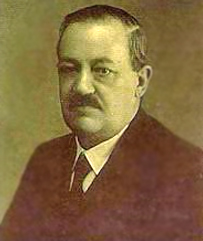
Figure 2. Professor Dr. Đorđe Joanović
BIOGRAPHY OF DOCTOR ĐORĐE JOANOVIĆ
Education of Dr. Đorđe Joanović
Đorđe Joanović completed his primary education in Vienna and
subsequently enrolled in the highly esteemed Vienna Gymnasium
"Kaiser und König," where he graduated in 1889. He then entered the
Medical Faculty in Vienna, graduating in 1895. Immediately after
completing his studies, he was employed at the same faculty as an
assistant from 1895 to 1899 in the Institute of Pathological
Histology and Bacteriology. He later moved as an assistant to the
Institute of General and Experimental Pathology, where he worked
from 1899 to 1904.
During this period, he worked under the renowned pathologist
Professor Paltauf (1858–1924), a student of Pasteur and Koch.
Joanović was appointed as a docent in 1904. He became an associate
professor of general and experimental pathology at the Vienna
Medical Faculty in 1910 and a full professor in 1919. At that time,
the rector of the University of Vienna was the famous pathologist
and academician Carl von Rokitansky (1804–1878). The main rivals of
the Vienna Medical School worldwide were Berlin, Paris, London, and
to some extent St. Petersburg.
Dr. Joanović led the Department of General Medical Pathology in
Vienna, conducting advanced experiments in prestigious laboratories
of the Institute of Pathology. For the next twenty-five years, he
remained a dedicated and respected collaborator. During this time,
he held the highest academic rank and position among Serbs globally,
with a particular focus on experimental oncology, pathology,
oncological pathology, and pathological morphology.
Arrival of Dr. Joanović in Serbia
After the end of World War I, Dr. Milan Jovanović-Batut and Dr.
Vojislav Subotić invited Dr. Đorđe Joanović to come from Vienna to
Serbia and contribute his expertise and organizational skills to the
establishment of the Medical Faculty in Belgrade. Dr. Joanović
accepted the invitation without hesitation. At the first session
held on February 20, 1920, the inaugural assembly of professors of
the Medical Faculty in Belgrade took place. Dr. Milan
Jovanović-Batut was elected dean, and Dr. Đorđe Joanović was
appointed full professor of general pathology.
At that time, Dr. Joanović made the decision to leave his scientific
work in prestigious Viennese laboratories and his university career
in Vienna. He moved to Belgrade on May 6, 1920, with a strong desire
to contribute to the development of medicine in war-torn Serbia. He
faced significant organizational challenges and obstacles, including
some unjust opposition from certain individuals.
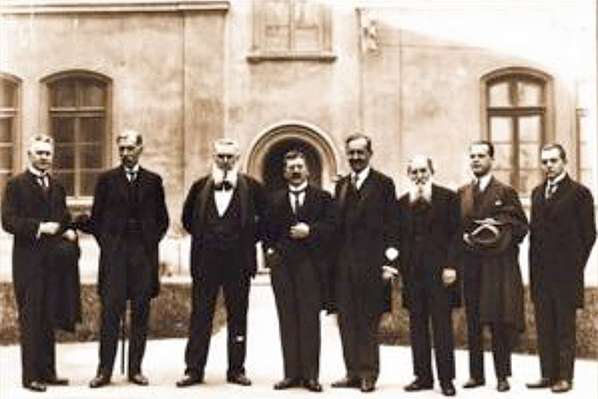
Figure 3. The first eight professors of the
Medical Faculty in Belgrade; from left to right: Dr. Miloš
Bogdanović, Dr. Richard Burian, Dr. Vladan Đorđević, Dr. Pavle
Popović, Dr. Đorđe Joanović, Dr. Milan Jovanović-Batut, Dr. Milivoje
Kostić, and Dr. Slobodan Kostić.
In 1924, Professor Richard Paltauf passed away in Vienna. About
twenty esteemed German pathologists applied to fill his university
chair, but the Faculty Council of the Medical Faculty in Vienna
chose to invite Dr. Đorđe Joanović to return and occupy Paltauf’s
position. This was a significant recognition of Dr. Joanović’s
expertise and knowledge. Despite difficult working conditions in
Belgrade, he declined the offer, wishing to complete the projects he
had begun in Serbia.
After the founding of the Medical Faculty in Belgrade, Dr. Joanović
worked on establishing the Oncology Service of the Kingdom of Serbs,
Croats, and Slovenes and provided the initiative and detailed
conceptual plans for the Institute of Pathology in Belgrade. The
construction took three years, during which he actively
participated, giving concrete advice. Based on his designs and
ideas, the new Institute of Pathology building was completed and
officially opened on April 22, 1926. At the opening, Dr. Joanović
delivered the inaugural speech. The Institute quickly became a
regional center for experimental pathology. His collaborators
included Ksenofon Šahović (1898–1956), Dimitrije Tihomirov, Marija
Višnjić, Živojin Ignjačev, and others. Dr. Joanović spent entire
days in the laboratories, even converting his office into his living
quarters.
Almost every day at 8 a.m., he attended autopsies; at noon, he
delivered lectures, and in his free time—usually in the
afternoons—he worked with colleagues on diagnosing histological
samples. Twice a week, at the end of practical histology exercises,
he personally explained the data for students using projections of
histological specimens. Patients with neoplasms often requested
consultations with him, which he always granted, providing
comprehensive advice and frequently written recommendations.
In 1926, he became a corresponding member of the Serbian Royal
Academy of Sciences. Dr. Joanović dedicated his life entirely to
medical science and the fight against cancer. On September 27, 1927,
he founded the Yugoslav Society for the Study and Suppression of
Cancer, with K. Šahović as general secretary. At that time, this
society was the fourth of its kind in the world, after Vienna
(1910), Washington (1917), and Paris (1920). He represented Serbia
and Yugoslavia at numerous medical congresses in Europe and the
United States.
Professor Dr. Đorđe Joanović was the only dean of the Medical
Faculty to be elected four times (1923/24, 1925/26, 1927/28,
1928/29). He also founded the Association of Yugoslav Physicians,
serving as its honorary and lifelong president. He was president of
the Serbian Medical Society and a close friend of medical students,
elected as lifelong honorary president of the Yugoslav Medical
Students’ Union. In 1928, he was awarded the Order of Saint Sava,
Second Class. He was the initiator of the idea to establish the
Institute for Oncology and Radiology in Belgrade, which was
completed in the autumn of 1939 under the patronage of Her Majesty
Queen Maria, with Prince Pavle Karađorđević as the main donor.
Dr. Joanović brought his vast medical knowledge and university
reputation from Vienna. He was known for his expertise, precision,
and meticulousness. Privately, he loved music and art and was an
accomplished violinist. He had a quiet and modest nature that
charmed and won over his interlocutors. Students and colleagues
deeply respected, valued, and loved him, appreciating his support
and advocacy for student autonomy at the university.
He was especially beloved as a professor who sought to understand
and help students with their problems. However, his solidarity with
students seeking university autonomy displeased city authorities,
leading to significant difficulties. In 1929, during the
proclamation of the Obznana and the introduction of the January
dictatorship, the regime harshly targeted political opponents,
including students. Although not politically active, he supported
students and workers. According to some reports, on January 27,
1932, he had a heated dispute with Prime Minister General Petar
Živković, which ended with the general slapping him.
Dr. Đorđe Joanović never married. When asked why, he answered
similarly to Nikola Tesla: “When I began experiments in pathology, I
realized that science requires a whole person.” His brother Simeon
Joanović was married to Ana but had no children, so the Joanović
family line unfortunately ended.
TRAGIC END OF PROFESSOR DR. ĐORĐE JOANOVIĆ
The epilogue of Dr. Joanović’s life was tragic. In 1932, while
organizing the annual St. Sava Students’ Ball, medical students
informed him that King Alexander I of Serbia was welcome to attend,
but not his Prime Minister, General Petar Živković. General Živković
summoned Dr. Joanović to his office, where they engaged in a bitter
argument. Humiliated, Dr. Joanović stormed out and returned to his
Institute of Pathology, to his room. On the morning of January 28,
1932, he was found hanged from a window latch, with his body lying
in his armchair. A maid discovered the lifeless body and immediately
called her husband, who worked as a janitor in the Institute
building. He removed Dr. Joanović’s body from the rope. Professor of
Pathology Dr. Marija Višnjić-Frajnd reported that a large amount of
ashes was found in the fireplace that morning, indicating that he
had burned his personal files. The unexpected death of Professor Dr.
Đorđe Joanović caused sorrow and surprise. The circumstances of his
death remain unclear, and many suspect that he may have been
murdered. His death provoked outrage among Belgrade intellectuals,
as many immediately doubted that the professor had taken his own
life.
The Medical Faculty Council decided to hold a brief memorial service
in the amphitheater of the Institute of Pathology in Belgrade, while
a religious ceremony would be conducted in his native village of
Beodra. His remains were transported by train, accompanied by a
large number of students, friends, and colleagues. Belgrade had
never before witnessed such a massive and solemn procession to the
railway station for a funeral. Several hundred students, mainly from
the Medical Faculty, attended the burial, along with many prominent
figures from the public life of the Kingdom of Yugoslavia. Dr.
Joanović was interred at Beodra Cemetery on January 29, 1932.
Although his death was suspected to be a suicide, Serbian Patriarch
Varnava authorized a funeral service for the esteemed deceased.
On February 28, 1932, a politically motivated article titled “The
Case of Professor Joanović” was published by his opponents, Dr.
Svetozar Moačanin and Dr. Dušan Petrović, claiming: "He came to
Serbia to create, and therefore his principled views on the faculty
morally and scientifically diverged diametrically from those of his
opponents. Joanović came to teach students, not to seek titles, high
salaries, or benefits from Belgrade sanatoriums and other political
or financial advantages."
The article was met with condemnation from many contemporary
intellectuals, students, and ordinary citizens. Dr. Dimitrije
Tihomirov, assistant professor of general pathology and pathological
anatomy at the University of Belgrade, wrote in Glasnik za staleška
i zdravstvena pitanja (February 15, 1932):
"With feelings of profound and deep sorrow over this sudden,
immense, and irreparable loss for the Medical Faculty and the
Kingdom of Yugoslavia, I will attempt to give but a faint picture
and brief characterization of the late teacher, who was
simultaneously a Yugoslav and European scholar of great stature."
Dr. Joanović’s international reputation was evident from a letter of
condolence from the International Office of Public Hygiene in Paris,
addressed to the Minister of Social Policy and Public Health: "The
news of Professor Joanović’s death has caused us deep sorrow, for he
was among the most highly esteemed scholars, and in his lectures, he
was always most attentively listened to, despite being personally
very modest."
Today, only words of admiration and respect remain for this great
scientist and human being. Pharmacist Stevan Vukov from Zrenjanin,
who has studied Dr. Joanović’s life and work, commented: "For a
time, I was closer to the conclusion that Dr. Joanović was the
victim of a crime than that he committed suicide. Those who take
their own lives are denied a church funeral, yet he was buried with
a priest present, according to all Serbian Orthodox Church customs.
Over time, understanding more about Joanović’s noble character and
high moral principles, I became more inclined to believe that he
ended his own life as an act of moral superiority, refusing to
compromise his principles." — Politika, May 11, 2020.
After his death, a “Fund” was established in his name for the best
annual topics in experimental pathology. On December 10, 2007, on
the occasion of marking 80 years of the fight against cancer in
Serbia, Professor Dr. Đorđe Joanović was posthumously awarded the
Golden Medal of the Serbian Society for the Fight Against Cancer,
presented to Academician V. Kanjuh..
SCIENTIFIC CONTRIBUTIONS OF PROFESSOR DR. ĐORĐE JOANOVIĆ
Contribution to Medicine and Oncology
Professor Dr. Đorđe Joanović’s contribution to medicine,
particularly oncology in Serbia, is immeasurable. His scientific
work in experimental pathology and immunopathology was pioneering on
a global scale, earning him an impressive international reputation.
He authored 58 significant scientific papers and collaborated with
two of the most prestigious medical journals in Europe. The
foundation of his work had been laid during his time in Vienna. He
devoted himself to experiments on oncological diseases and studied
the epidemiology of carcinogenesis. Professor Joanović paid special
attention to pathological changes in tissues caused by various
diseases, with a particular focus on pathological anatomy and
histology.
The modern Vienna school of pathology was developed by Professor
Richard Paltauf together with his closest collaborators, Professor
Karl Stanberg and Professor Đorđe Joanović. Joanović’s first
scientific paper, published in 1899, addressed the origin and
significance of plasma cells during pathological processes. From
this early work, he turned to oncology, then a relatively new field,
and began conducting experiments in advanced Viennese laboratories
on oncological pathology.
Work in Experimental Oncology and Oncological Pathology
Dr. Đorđe Joanović was the first Serbian oncologist-scientist,
starting his work in oncology in 1920. At that time, thanks to the
Berlin pathologist Rudolf Virchow (1821–1902), the basic principles
of oncological pathology were already recognized.
Professor Joanović focused extensively on the study of cancer,
especially on factors influencing the growth of experimental
carcinomas and sarcomas, including: diet, chronic anemia, various
alkaloids, and extirpation of endocrine glands. He believed that
predisposition, local changes, and general metabolic disturbances
were critical in cancer development.
He investigated the pathological morphology of tumors, including
bronchogenic carcinoma, cystic neck tumors, atheroma calcification
and ossification, tumor development through irritation, and the
multicentric origin of tumors within an organ. He studied tumor
growth in vivo and in vitro using tumor tissue cultures.
Professor Joanović observed that castration and splenectomy promoted
tumor growth, while rice also stimulated growth. Certain toxic
substances, including small doses of morphine, cocaine, and quinine,
as well as toluidinediamine intoxication, slowed tumor growth. He
explored the immunological aspects of cancer therapy using
fermentative extracts from tumor tissues of the same patients.
Lymphectasia, plasma cell accumulation, and connective tissue
proliferation with sequestration of carcinoma cells were indicative
of tumor regression in experimental animals.
Considering that erysipelas infection could destroy skin carcinoma,
he also experimented with bee venom in cancer therapy. His
publications provide extensive reviews of experimental cancer
research and the effects of radium. Dr. Joanović’s overall insight
into cancer etiology and pathogenesis offered authentic and relevant
information about the state of oncology in his era.
Work in Experimental Pathology and Pathological Morphology
Dr. Đorđe Joanović is regarded as the founder of oncology and
experimental pathology in Serbia. He also researched staining of
microorganisms in pathological tissues, studied liver pathology, and
authored significant scientific papers in this area. His work on
liver disease included studies on the pathogenesis of jaundice,
recognized by the Belgian Royal Medical Academy.
His experimental studies demonstrated that jaundice induced by
toluidinediamine disappeared after splenectomy, providing a
foundation for therapeutic splenectomy in hemolytic jaundice. Of
particular interest are his experimental studies on the liver and
fat metabolism. Dr. Joanović’s work in experimental pathology and
pathological morphology covered various areas, including tetanus
prophylaxis, anaphylactic shock, transplantation problems, and
nutritional pathology. His scientific contributions laid the
groundwork for modern pathology and oncology in Serbia and earned
him international recognition as a pioneering researcher.
Discoveries on Autoimmunity and Final Assessment of Professor
Dr. Đorđe Joanović
Discoveries on Autoaggression (Autoimmunity)
Professor Dr. Đorđe Joanović observed that soldiers with healed head
and brain injuries from firearms sometimes suffered severe headaches
and even died. Autopsies revealed multiple areas of softened brain
tissue both near and distant from the healed injury site. Similar
results were obtained in his experiments on white rats subjected to
mechanical head injuries.
From these observations in humans and animals, he concluded that
brain degradation products stimulate the immune system to produce
antibodies not only against these products but also against similar
substances in healthy brain cells, leading to widespread brain
softening.
Joanović attempted to apply this original etiopathogenetic concept
to therapy for superficial skin carcinoma and tuberculous granulomas
in animals by injecting disintegrated carcinoma or granulomatous
tissue (or digested Koch bacilli) under the skin of the same
subjects. He also treated dermatoses, such as Trichophiton tonsurans
infections, using disassociated products, and psoriasis using
scarammas (scrapings). This method of treatment using coagulation
products was successfully applied in psoriasis therapy. He presented
these findings at the International Office for Hygiene in Paris in
1929, after which his institute further developed work using this
approach.
Professor Joanović was a pioneer in identifying autoaggression
processes in medicine. This discovery of autoaggression represents
one of his most important scientific achievements, though it remains
little known both in Serbia and abroad. He first presented his
findings in 1920 before the Vienna Medical Society and published two
papers that year in the Viennese clinical journal Vochenschrift:
“Effect of Brain and Bacterial Products Obtained by Enzymatic
Destruction”, “New Views on the Origin and Therapy of Certain
Diseases”. Through his results in experimental oncology and the
discovery of autoaggression in medicine, Dr. Joanović gained a
reputation as one of the most significant scientists
internationally. In recognition, the Belgian Royal Academy awarded
him a prize in 1903 for his scientific work.
Additionally, Professor Joanović conducted experimental studies on
tuberculosis, the effects of radioactive substances on pathological
organ changes, and non-surgical treatment methods for cataracts.
CONCLUSION
Professor Dr. Đorđe Joanović served for many years as head of the
Institute of General Pathological Anatomy in Vienna. He was widely
recognized as an exceptionally skilled specialist in
pathological-anatomical diagnostics, a figure of great authority,
trust, and esteem.
His contributions to medicine and especially oncology in Serbia are
of immeasurable significance. His work in experimental pathology and
immunopathology was pioneering even by global standards, earning him
an impressive international reputation. Joanović possessed equal
mastery of both the morphological and physiopathological aspects of
his discipline, combined with a rare ability for acute observation,
enabling him to reach correct conclusions quickly.
Professor Joanović devoted his entire life selflessly to science,
spending full days at the Institute of Pathology. He was always
approachable, remarkably attentive, and treated his students with
fatherly care, explaining their errors patiently and supporting
them, both morally and sometimes materially. His teaching extended
beyond lectures and exercises; he used every opportunity to instruct
and guide younger generations, exemplifying gentlemanly conduct,
deep trust, and responsiveness.
In his interactions, Joanović demanded mutual trust and consensus.
He was accessible to all students, physicians, and citizens. His
kindness was well known to anyone who spoke with him or sought his
counsel.
Professor Dr. Joanović was not only a great scientist but also a man
of noble moral character. His imposing presence, calm demeanor, and
composed behavior created the impression of a serene, steady, and
approachable individual. By refusing to compromise on principles
contrary to his values, he demonstrated moral superiority.
He was a man of rare virtues, devoted entirely to science, medical
practice, and the dignity of his nation. A true patriot, he
dedicated himself to the advancement of knowledge, the care of
patients, and the service of his country, leaving a legacy of
scientific brilliance and human nobility.
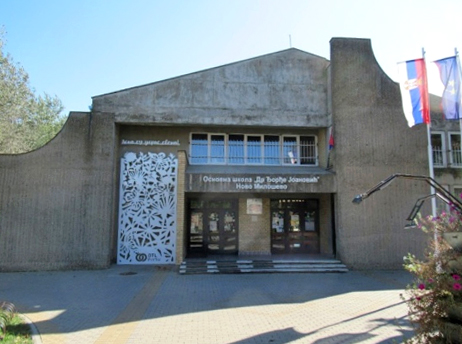
Figure 4. Primary School “Đorđe Joanović” Novo
Miloševo, Beodrad
LITERATURE
- Prof. dr Đorđe Joanović, Glasnik i lekarska pitanja 1932;
br. 3. Arhivirano iz orginala 10.04.2019. godine Pristupljeno
10.04.2019. godine
- “Ustanak Crnogoraca Đure Jakšića ili o zagonetnim putevima
jedne slike” arhivirano iz orginala 05.08.2020. godine s.
Pristupljeno 06.07.2019. godine
- Joanović Ð. Odnos između uzroka bolesti i procesa
ozdravljenja. (Predavanje prilikom otvaranja Patološkog
instituta u Beogradu, na dan 22. aprila 1926. godine).
- Levntal Z. Joannović, Ðorđe (In Serbian). Medicinska
enciklopedija. Zagreb: Jugoslavenski leksikografski zavod
- Milosavljević T. Ðorđe Joannović − patolog “Djordje
Joannović – pathologist”. (In Serbian).
- Kovačev M. Život, rad i sudbina profesora Ðorđa Joannovića
Iz lekarske perspektive,
- Jančić-Zguricas M. Tajne ljudi u belom s
kliničko-morfološkom korelacijom slučajeva. Zapisi jednog
patologa Beograd: Beogradska knjiga; 2005.
- Čikarić S. 80 godina borbe protiv raka u Srbiji.
Jugoslovensko društvo za izučavanje i suzbijanje raka. Društvo
Srbije za borbu protiv raka. Beograd: Društvo Srbije za borbu
protiv raka; 2007.
- Kanjuh V, Stevanović G, Ostojić M, Stanković Z, Dimitrijević
J, Kanjuh S. Rudolf Virchow (1821-1902. godine) i njegov uticaj
na razvoj patološke anatomije u Srbiji.
- Kanjuh V. Patološka anatomija u Srbiji i Crnoj Gori.
Istorijat (od početka u drugoj polovini XIX veka do 1992.
godine), razvoj i današnje stanje. Simpozijum “Dostignuća i
stremljenja u patologiji“. Niš.1992:5-8.
|
|
|
|