Journal of Regional Section of Serbian Medical Association in Zajecar

Year 2026     Vol 51     No 1
     
      [ Contents ] [ INDEX ] <<< ] >>> ]      
               
   
Original papers

IMPACT AND ASSESSMENT OF NUTRITIONAL STATUS IN PATIENTS UNDERGOING TREATMENT FOR COLORECTAL CANCER

Teodora Filipović (1,4), Dalibor Perić (2,4), Natalija Jovanović (3,4)

(1) DOM OF HEALTH KUČEVO; (2) GNJILANA HEALTH CENTER; (3) DOM OF HEALTH IN NIŠ; (4) FACULTY OF MEDICINE OF THE UNIVERSITY OF NIS


  Download in pdf format   Summary: Introduction: Hypertension is one of the most significant risk factors for cardiovascular diseases and a leading cause of morbidity and mortality worldwide. During the COVID-19 pandemic, an increase in the number of individuals with newly diagnosed hypertension was observed, suggesting a possible association between SARS-CoV-2 infection, immune response, and vascular changes. Aim: To examine a possible association between COVID-19 infection, SARS-CoV-2 vaccination, and the occurrence of hypertension in the adult population. Materials and Methods: The study was conducted using an anonymous questionnaire that included 203 respondents of both sexes and three age categories. Lifestyle factors, previous COVID-19 infection, vaccination status, and the occurrence of hypertension were descriptively analyzed. Results: Of the total 203 respondents, 72.9% were female and 27.1% male. A total of 144 respondents (70.9%) had a history of COVID-19 infection, and 43 individuals (21.2%) had diagnosed hypertension. Among them, 17 individuals (40.5%) initiated antihypertensive therapy within the last 5 years, following COVID-19 infection. A total of 59.1% of respondents were vaccinated, and the majority did not report adverse effects. Conclusion: The results indicate a statistically significant association between COVID-19 infection and increased incidence of hypertension in the post-pandemic period (χ² = 21.3; p < 0.001), while vaccination against COVID-19 was not statistically significantly associated with newly developed hypertension..
Keywords: COVID-19, hypertension, vaccination, SARS-CoV-2, cardiovascular risk.
 
     
      INTRODUCTION

Hypertension (HTN) is the most common chronic disease of modern society and a leading risk factor for the development of coronary artery disease, cerebrovascular events, and chronic kidney disease [1]. The global COVID-19 pandemic, caused by the SARS-CoV-2 virus, has prompted numerous studies on the impact of infection on the cardiovascular system. Proposed mechanisms include inflammatory processes, endothelial dysfunction, and dysregulation of the renin–angiotensin–aldosterone system (RAAS). [2,3].
During the pandemic, it was observed that individuals who had recovered from COVID-19, even in mild forms, often developed elevated blood pressure several months later [4]. The role of vaccination in the onset or worsening of hypertension has also been the subject of numerous discussions, although most data indicate that the benefits of vaccination significantly outweigh potential risks. [5].
Current research suggests that infection with SARS-CoV-2 may increase the risk of developing new-onset hypertension or worsening pre-existing hypertension, particularly in hospitalized patients and individuals with comorbidities. Studies investigating the effects of COVID-19 vaccination report rare and mostly transient episodes of elevated blood pressure, with no evidence of a causal relationship with persistent hypertension. Overall, there is a substantial body of evidence supporting an association between COVID-19 infection and hypertension, whereas the impact of vaccination remains insufficiently studied and requires further long-term research.
In a large retrospective cohort (~64,000 patients) from the Stony Brook Health System, new-onset hypertension was significantly more frequent in hospitalized COVID-19 patients compared with COVID-negative controls (HR ≈ 1.57; CI 1.35–1.81) and in non-hospitalized infected individuals (HR ≈ 1.42; CI 1.24–1.63) [6]. This finding suggests that infection may act as a trigger for new-onset hypertension, particularly in more severely ill patients. In the study by Trimarco et al. (2024), a 7-year cohort of over 200,000 adults demonstrated that the incidence of new hypertension increased during the pandemic period (2020–2022) from approximately 2.11% to 5.20% annually (RR = 2.46) compared with the pre-pandemic period (2017–2019) [7]. This implies that the pandemic itself—including infection as well as indirect factors such as stress and reduced physical activity—may contribute to the rise in hypertension incidence. In the publication by Ebinger et al. (2022), it was shown that even individuals vaccinated with ≥3 doses of mRNA vaccines had an increased risk of hospitalization if they had hypertension as a comorbidity. Although this does not directly address the onset of hypertension, the study confirms that hypertension remains an important risk factor for adverse COVID-19 outcomes [8]. Potential mechanisms include endothelial dysfunction following SARS-CoV-2 infection, systemic inflammation, activation of the renin–angiotensin–aldosterone system (RAAS), and increased arterial stiffness. A study by Marozzi et al. (2025) demonstrated increased arterial stiffness in individuals after SARS-CoV-2 infection [9]. A review of the relevant literature indicates that there is moderate to substantial evidence supporting an association between SARS-CoV-2 infection and an increased risk of new-onset hypertension or worsening of existing hypertension.
Regarding the impact of COVID-19 vaccination on the incidence or worsening of hypertension, there is a meta-analysis including approximately 357,387 participants which showed that about 3.20% (95% CI: 1.62–6.21) of subjects experienced some form of elevated blood pressure following COVID-19 vaccination. The proportion of cases that reached stage III hypertension or hypertensive urgency/emergency was about 0.6% (95% CI: 0.1–5.1%) [10]. In the study by Syrigos et al. (2022), 797 healthcare workers (mean age 48 years) who received the BNT162b2 (Pfizer) vaccine were monitored for blood pressure changes after vaccination. The results showed that seven individuals experienced a significant increase in blood pressure (grade 2 or 3 hypertension), which was transient and lasted 3–4 days [11]. The study by Ecina and Okura (2024) examines new-onset hypertension in vaccinated individuals compared to unvaccinated controls. The authors emphasize that it cannot be attributed to the vaccine alone with certainty, as participants with hypertension were older, had higher BMI, and more comorbidities [12]. Although there are reports of increased blood pressure following vaccination, the phenomenon is rare, most often transient, and currently insufficiently studied to claim that vaccination significantly contributes to the occurrence of hypertension in the population. Comparative consideration of existing research findings in the available literature shows that studies on infection are more numerous in terms of sample size and follow-up duration than studies on vaccination in the context of hypertension. In the case of infection, there is clear evidence of an increased risk of new-onset hypertension and worsening of pre-existing hypertension. In the case of vaccination, extremely rare episodes of elevated blood pressure may occur, but there is no strong evidence that vaccines cause persistent hypertension.
Based on this, future research should focus on distinguishing the contribution of the infection itself from indirect pandemic-related factors (reduced physical activity, increased stress, dietary changes) in the rise of hypertension. Additionally, it is necessary to determine whether there is a specific subpopulation in which vaccination (e.g., individuals with pre-existing hypertension) has a more pronounced effect on blood pressure regulation. Furthermore, longitudinal studies are needed that track blood pressure before vaccination, immediately after, and over longer follow-up periods (months/years), in order to clarify the role of immunoinflammation, endothelial dysfunction, RAAS activation, and changes in vascular function following infection and/or vaccination.

AIM

The aim of this study was to analyze the potential association between COVID-19 infection, SARS-CoV-2 vaccination, and the occurrence of hypertension in adults, while also assessing additional risk factors (sex, age, smoking, physical activity, and diet).

MATERIAL AND METHODS

The study was conducted during 2025 on a sample of 203 participants. The questionnaire consisted of 25 questions covering sociodemographic characteristics, dietary habits, physical activity, smoking, alcohol consumption, as well as data related to COVID-19 infection and vaccination. The analysis was performed descriptively using percentage distributions and hypothesis testing. Special emphasis was placed on participants with hypertension, the date of initiation of therapy, and a possible association with previous COVID-19 infection. The data were processed descriptively and analytically using SPSS v.26 software. Statistical significance testing was performed using the chi-square (χ²) test for categorical variables. Statistical significance was accepted at p < 0.05..
COVID-19 vaccination and hypertension – age and hypertension. Although mean age values were not available for each group, preliminary analysis suggests that hypertension is more common in the middle-aged category (>45 years).

RESULTS

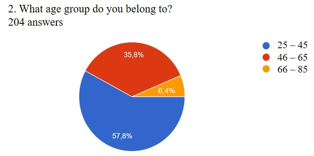
Age structure of participants (Figure 1): Out of 203 respondents, the most represented group was the younger population aged 25–45 years (57.6%), followed by the middle-aged group of 46–65 years (35.8%), while the older population aged 66–85 years was the least represented (6.4%).

Graph 1. Distribution of the age structure of respondents

Gender structure and hypertension:
The study showed a predominance of female participants, with 148 (72.9%) women, while there were almost three times fewer men—55 (27.1%). No statistically significant difference was found in the prevalence of hypertension between men and women (p > 0.05).
Lifestyle habits (Table 1):
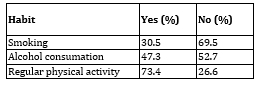
Smoking was present in a smaller proportion of participants—30.5%, while alcohol consumption was reported by slightly less than half of the respondents (47.3%). Most participants reported moderate physical activity (3–4 times per week or daily; 73.4%), which is a reassuring finding in terms of cardiovascular prevention.

Table 1. Habits and risk factors

Diet and anthropometric data:
The majority of respondents reported daily consumption of vegetables (88.2%) and fruit (65%). Regarding body weight, 33% of participants had a body weight between 71–90 kg, while overweight and obese individuals (>90 kg) accounted for 45.3%. BMI was not calculated, nor was waist circumference, a marker of abdominal obesity.
Hypertension and family history:
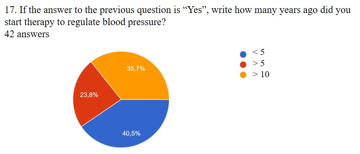
Hypertension was present in 43 participants (21.2%), while a positive family history of hypertension was reported in 68.5% of respondents. Among those with hypertension, 17 individuals (40.5%) had been on therapy for a shorter period (up to 5 years), while 35.7% had been receiving pharmacological treatment for more than 10 years (Figure 2).

Habit Yes (%) No (%)
Smoking 30.5 69.5
Alcohol consumation 47.3 52.7
Regular physical activity 73.4 26.6

Chart 2. Distribution of respondents as a function of time of initiation of therapy for blood pressure regulation

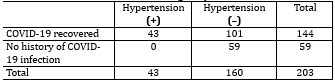
COVID-19 infection and hypertension: A total of 144 participants (70.9%) had previously had COVID-19 infection, while only 13 (9.0%) experienced a more severe form of the disease. Hospitalization was reported in only 4 participants.
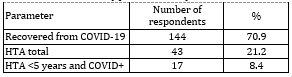
Among the 43 participants with hypertension (100%), 17 (40.5%) had newly diagnosed hypertension after recovering from COVID-19, suggesting a possible association (Table 2). It is particularly noteworthy that 40.5% of hypertensive patients initiated therapy after the pandemic.

Table 2. Association between COVID-19 infection and hypertension (HTA)

A statistically significant association between previous COVID-19 infection and the presence of hypertension was analyzed using the χ² test: the relationship between COVID-19 infection and the occurrence of hypertension. The contingency table (COVID +/− × HTA +/−) showed a significant correlation: χ² = 21.3; df = 1; p < 0.001, indicating that individuals who had previously had COVID-19 were significantly more likely to develop new-onset hypertension and initiate treatment after the pandemic compared to those who were not infected (Table 3).

Table 3. Contingency table

(This includes the 17 newly diagnosed cases after COVID-19 infection, as all HTA+ participants are included in this row)

There is a statistically significant association between COVID-19 infection and newly diagnosed hypertension (p < 0.001).
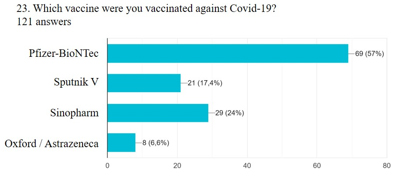
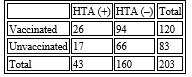
Vaccination and adverse effects: A total of 59.1% of participants (120 individuals) were vaccinated, most commonly with the Pfizer vaccine (56.7%). Adverse effects were reported in only 8.3% of participants, most of which were mild in nature (fatigue, pain at the injection site).

Figure 3. Graphical representation of the distribution of administered COVID-19 vaccines by manufact


Table 4. Contingency table (derived from text)

(The distribution was estimated based on proportions; no difference in the frequency of adverse effects was observed.)

Gender and age could not be analyzed numerically.

DISCUSSION

Results indicate that there is a statistically significant association between previous COVID-19 infection and the occurrence of hypertension, particularly new-onset arterial hypertension (defined as hypertension diagnosed within less than 5 years). These findings are consistent with other studies suggesting that the SARS-CoV-2 virus affects ACE2 receptors, leading to endothelial dysfunction and increased blood pressure [13,14]. Notably, 40.5% of hypertensive patients initiated therapy after the pandemic, which is statistically significant and may indicate post-COVID hypertension. Most participants in the newly developed post-COVID hypertension group had a mild form of the disease, suggesting that even subclinical damage may have long-term consequences [15]. According to the survey data, vaccination did not have a statistically significant impact on the occurrence of hypertension—most vaccinated participants did not report adverse effects, nor was an increase in blood pressure observed following immunization. This is consistent with published meta-analyses showing that COVID-19 vaccines do not increase the risk of hypertension [16,17]. The results of this study indicate a clear trend toward increased incidence of newly diagnosed hypertension in the post-COVID period. The fact that 40% of hypertensive participants initiated therapy within the last five years, all of whom had a history of COVID-19 infection, supports the hypothesis of a possible pathophysiological link between SARS-CoV-2 and long-term vascular changes. This finding aligns with an increasing body of evidence suggesting that infection may induce persistent alterations in blood pressure regulation, including endothelial inflammation, ACE2 receptor disruption, RAAS activation, increased arterial stiffness, and autonomic dysfunction. Such findings support the concept of “silent endothelial injury,” where viral infection causes subclinical damage that becomes clinically evident over time. Additionally, studies indicate that post-COVID syndrome may include autonomic dysregulation, characterized by blood pressure variability, palpitations, and tachycardia, which may also contribute to the development of hypertension. Regarding vaccination, our data suggest that no significant increase in hypertension was observed following immunization in the studied population. This is consistent with the majority of published meta-analyses showing that episodes of elevated blood pressure after vaccination are most often transient, mild, and without long-term consequences. It is also important to emphasize the significant influence of lifestyle and anthropometric factors. In our sample, obesity was relatively common, while physical activity was present in most participants but often only of moderate intensity. These parameters, along with a positive family history, are well-known risk factors for hypertension and may partially explain the increased prevalence, particularly during periods of reduced physical activity and increased stress during the pandemic. When all factors are considered together, it may be assumed that in many individuals a combined effect of infection, stress, altered lifestyle habits, and pre-existing predisposition contributed to the manifestation of hypertension. The findings of this study complement existing literature and highlight the need for further multidisciplinary approaches, including cardiological, endocrinological, and immunological perspectives.

CONCLUSION

The results of this study confirm that there is a statistically significant association between previous COVID-19 infection and an increased incidence of newly diagnosed hypertension in the post-pandemic period. In a substantial number of participants, hypertension developed after 2020, which temporally corresponds to the pandemic and supports findings from international studies on the long-term cardiovascular consequences of SARS-CoV-2 infection. According to our results, vaccination does not play a role in the development of hypertension. These findings are consistent with current evidence indicating that the risk of hypertension associated with vaccination is low and most often transient. In the context of risk factors, the presence of obesity, a positive family history, and unhealthy lifestyle habits such as smoking and increased alcohol consumption, as is well established, may further contribute to the development of hypertension. Overall, the data suggest that COVID-19 infection is a significant health event that, in predisposed individuals, may accelerate or precipitate the onset of hypertension. Further, larger-scale and longitudinal studies are necessary to more precisely define the relationships between viral infection, immune response, vascular regulation, and long-term cardiovascular outcomes.

Acknowledgment: The authors thank Gordana Mundrić, Professor of English Language and Literature, for proofreading the English version of the manuscript.

LITERATURE:

1. WHO. Hypertension fact sheet. World Health Organization; 2023.
2. Guzik TJ., Mohiddin SA, Dimarco A, Patel V, Savvatis K, Marelli-Berg FM, et al. COVID-19 and the cardiovascular system: Implications for risk assessment. Eur Heart J.2020;41(19):1792–1801.
3. South AM, Brady TM, Flynn JT, ACE2, COVID-19, and hypertension: What is the connection? Hypertension. 2020;76(1):16–23.
4. Teymourzadeh A, Abramov D, Norouzi S, Grewal D, Heidari-Bateni G, Infection to hypertension: a review of postCOVID-19 new-onset hypertension prevalence and potential underlying mechanisms, 2025; Front. Cardiovasc. Med. 12:1609768.
5. Beladiya J, Kumar A, Vasava Y, Parmar K, Patel D, Patel S, Dholakia S, Sheth D, Boddu SHS, Patel C. Safety and efficacy of COVID-19 vaccines: A systematic review and meta-analysis of controlled and randomized clinical trials. Rev Med Virol. 2024;34(1):e2507.
6. Boparai MS, Gordon J, Bajrami S, Alamuri T, Lee R, Duong TQ, Incidence and risk factors of new-onset hypertension up to 3 years post SARS-CoV-2 infection. Sci Rep. 2025;15(1):28728.
7. Trimarco V, Izzo R, Pacella D, Trama U, Manzi MV, Lombardi A, Piccinocchi R, Gallo P, Esposito G, Piccinocchi G, Lembo M, Morisco C, Rozza F, Santulli G, Trimarco B. Incidence of new-onset hypertension before, during, and after the COVID-19 pandemic: A 7-year longitudinal cohort study in a large population. BMC Med. 2024;22(1):127.
8. Ebinger J.E, Driver M, Joung S, Tran T, Barajas D, Wu M, et al. Hypertension and Excess Risk for Severe COVID-19 Illness Despite Booster Vaccination, Hypertension. 2022;79(10):132-134.
9. Marozzi, M.S., Fucile, I., Panettieri, I. et al. COVID-19 induces greater difficulty in blood pressure control due to increased arterial stiffness. Intern Emerg Med. 2025; PMID: 41191289.
10. Angeli F, Reboldi G, Trapasso M, Santilli G, Zappa M, Verdecchia P. Blood Pressure Increase following COVID-19 Vaccination: A Systematic Overview and Meta-Analysis. J Cardiovasc Dev Dis. 2022;9(5):150.
11. Syrigos N, Kollias A, Grapsa D, Fyta E, Kyriakoulis KG, Vathiotis I, Kotteas E, Syrigou E. Significant Increase in Blood Pressure Following BNT162b2 mRNA COVID-19 Vaccination among Healthcare Workers: A Rare Event. Vaccines (Basel). 2022;10(5):745.
12. Ecin SM, Okur T. The relationship between hypertension and COVID-19 vaccine in the long term and occupational evaluation. Acta Medica. 2024;55(4):255-261.
13. Lanza K, Perez LG, Costa LB, Cordeiro TM, Palmeira VA, Ribeiro VT, et al. Covid-19: The renin-angiotensin system imbalance hypothesis. Clin Sci (Lond). 2020;134(11):1259-1264.
14. Xie Y, Xu E, Bowe B, Al-Aly Z. Long-term cardiovascular outcomes of COVID-19. Nat Med. 2022 Mar;28(3):583-590.
15. Tsampasian V, Back M, Bernardi M, Cavarretta E, Dębski M, Gati S, et al. Cardiovascular disease as part of Long COVID: a systematic review, European Journal of Preventive Cardiology. 2025;32(6):485–498.
16. Azami P, Vafa RG, Heydarzadeh R, et al. Evaluation of blood pressure variation in recovered COVID-19 patients at one-year follow-up: a retrospective cohort study. BMC Cardiovasc Disord. 2024;24:240.
17. Buso G, Agabiti-Rosei C, Muiesan ML. The relationship between COVID-19 vaccines and increased blood pressure: A word of caution. Eur J Intern Med. 2023;111:27-29.

Author contributions: Concept and design: Teodora Filipović and Dalibor Perić. Data collection: Teodora Filipović and Dalibor Perić. Statistical analysis: Dalibor Perić. Data interpretation: Teodora Filipović. Drafting of the manuscript: Teodora Filipović. Critical revision and final approval of the manuscript: Teodora Filipović, Dalibor Perić, and Natalija Jovanović.


      [ Contents ] [ INDEX ] <<< ] >>> ]      


Timočki medicinski glasnik, Zdravstveni centar Zaječar
Journal of Regional section of Serbian medical association in Zajecar
Rasadnička bb, 19000 Zaječar, Srbija
E-mail: tmglasnik@gmail.com

Pretraživanje / Site Search

  www.tmg.org.rs


      Design: Infotrend  
         

counter on myspace